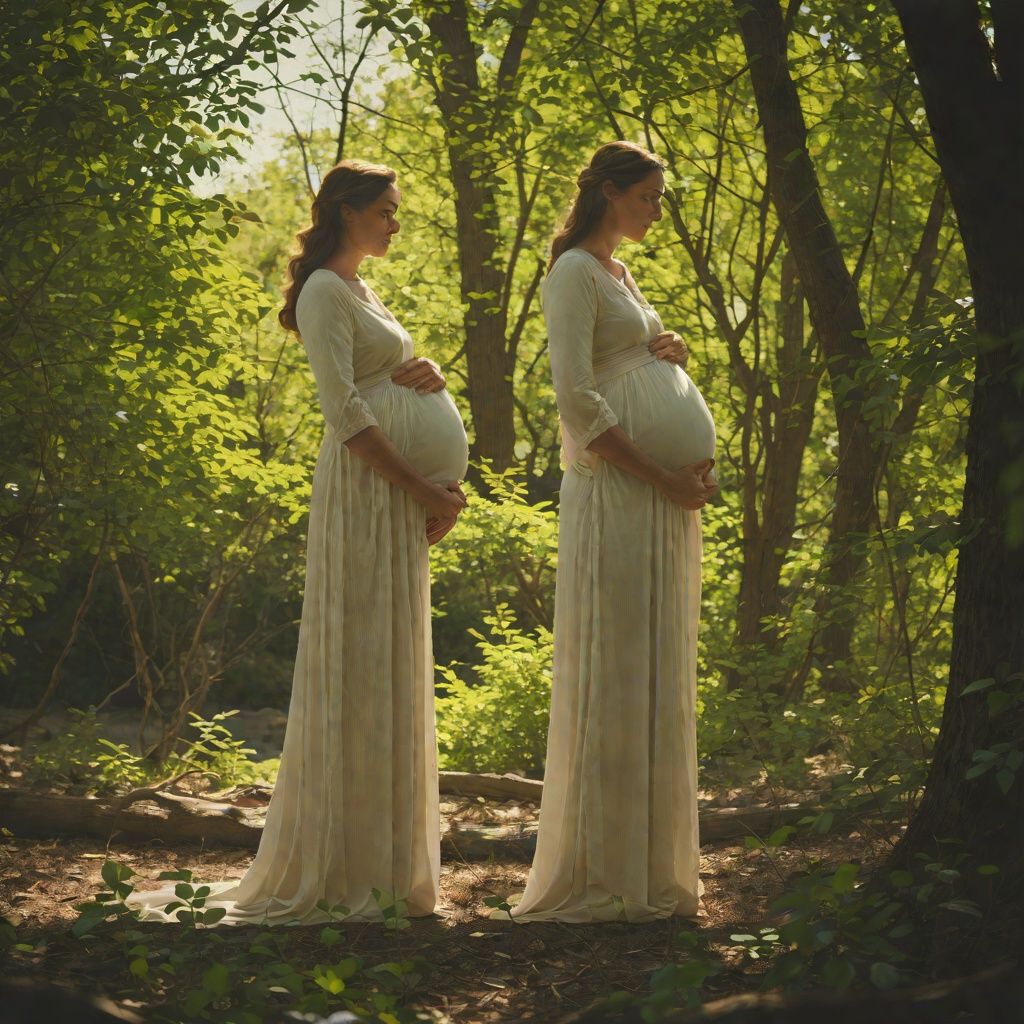
It ends with us
It Ends with Us“It ends with us” is the culminating expression of Lily Bloom’s refusal to pass domestic violence from one generation to the next. Spoken as a promise to her daughter, it transforms the story’s recurring injuries, apologies, and rationalizations into a firm boundary: the pattern that shaped Jenny Bloom’s marriage and began to shape Lily Bloom’s own life will not be allowed to shape the child’s.
Origin in a Cycle of Violence
The expression emerges after Lily has been forced to recognize that abuse is not defined only by its most spectacular act. Ryle Kincaid’s violence appears in successive forms: during the kitchen incident, his arm strikes Lily with enough force to knock her off balance, sending her face into a cabinet handle; later, after she grabs his shirt, he pushes her away and claims that she fell down the stairs, although Lily knows that he pushed her. After reading her journals, he attacks her again, biting her so violently across the collarbone that she screams and sobs while pleading for him to let her go. These incidents make the expression a response to repetition rather than to a single isolated rupture.
Lily’s mother, Jenny Bloom, explains why repetition becomes so difficult to resist. Each incident gradually pushes a victim’s limit farther: the first blow is followed by immediate remorse and promises, the next by more remorse, and the third by a beating. Eventually, even a slap can feel like a relief when it is compared with something worse. The pattern changes the standard by which danger is judged. “It ends with us” rejects that altered standard by refusing to measure safety against the worst previous injury.
The Declaration and Its Immediate Meaning
The expression is spoken in a concentrated scene of decision. Lily holds her daughter and admits that she cannot give her the life she once imagined: a home in which both parents remain together to love and raise her. Yet Lily also knows that keeping the family intact would expose the child to Ryle at his worst, when his temper makes him unrecognizable as a father. Her conclusion is shaped by memory. The good moments might exist, but the worst moments would be the ones most likely to remain with the child.
Lily first makes the shorter declaration, “It stops here.” She then specifies its scope—“With me and you”—before arriving at the fuller expression, “It ends with us.” The wording is both intimate and structural. “Us” refers to Lily and her daughter as the immediate pair who will be protected, but it also marks the point at which a family pattern is interrupted. The sentence does not claim that the past can be undone; it claims that the past will not be reproduced.
A Promise Against Inheritance
The expression gains force from Lily’s explicit understanding that cycles are excruciating to break. Continuing along a familiar path can seem easier than facing the fear of leaving it and possibly failing to land safely. Lily identifies herself and Jenny Bloom as having gone through the cycle, then draws a line around her daughter. The declaration therefore carries a generational meaning: Jenny Bloom endured the pattern, Lily Bloom has endured it, and Lily refuses to make the same experience part of her daughter’s life.
Its power also lies in the contrast between repetition and interruption. Ryle’s assaults are followed by remorse and appeals to love. After harming Lily, he says that he has nothing to say, that he cannot take back what he did, and that he cannot make a promise she will believe. He asks her not to take the baby away from him and presents his love for the unborn child as a reason to remain. The expression answers that emotional pressure without disputing that love may exist. It establishes that love, remorse, and good moments do not cancel the danger of recurrence.
Consequences and Lasting Motif
“It ends with us” is not merely a description of what Lily hopes will happen; it is a performative promise that organizes her action. By saying it while holding her daughter, Lily converts recognition into responsibility. The declaration accompanies her refusal to let the child witness Ryle’s violence and defines separation as protection rather than failure. Its consequence is a new family boundary in which the child’s future no longer depends on preserving the appearance of a two-parent home.
The expression also resolves the book’s recurring swimming imagery. At the beginning of the final emotional arc, Lily must confront the exhausting circularity of staying, leaving, forgiving, and fearing the next incident. In the epilogue, after Lily and Atlas Corrigan have reunited, Atlas tells her that she can stop swimming because they have finally reached the shore. The shore image provides a counterpart to “It ends with us”: both expressions describe an arrival after prolonged struggle, but the earlier declaration is the ethical turning point that makes the later peace possible.
Narrative and Thematic Significance
As a thematic statement, “It ends with us” defines the story’s central premise: recognizing a cycle of domestic violence and choosing to interrupt it can require more courage than continuing within the familiar pattern. The phrase compresses Lily’s movement from explaining Ryle’s behavior and responding to his remorse to evaluating its consequences for a child. It also reframes strength. Lily’s decisive act is not to endure one more incident in order to preserve the relationship, but to accept the pain and uncertainty of breaking the pattern.
The expression’s final word is especially significant. “Us” refuses both isolation and simple individual triumph. Lily is not promising only to save herself; she is promising to protect her daughter from becoming the next participant in the same cycle. In that sense, “It ends with us” names an ending that is also an inheritance: not the inheritance of violence, but the inheritance of a boundary strong enough to prevent it from continuing.